Application route
Use this route for system selection, work-area questions, source choice, lens and rotary planning, extraction constraints, sample testing, and a configuration discussion.
The most useful first message describes the material and coating, largest part, smallest feature, artwork format, expected batch, target finish, work-area constraint, ventilation plan, destination market, and desired review date.
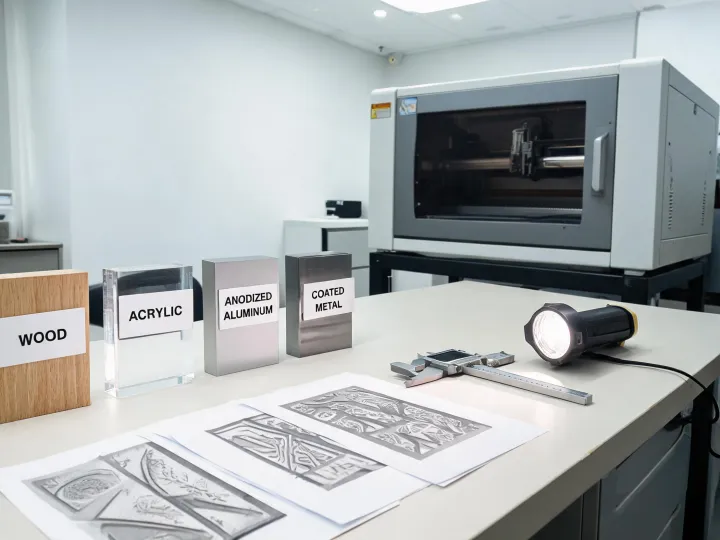
Use this route for system selection, work-area questions, source choice, lens and rotary planning, extraction constraints, sample testing, and a configuration discussion.
For an existing machine, include model and identifier, software, source file revision, material, settings, full error text, result photos, last known-good run, and recent changes.
State the destination market and exact configuration when requesting current safety, electrical, declaration, exhaust, maintenance, or accessory documentation.
Do not send an unknown material for laser testing. Confirm the substrate and coating with the supplier, including adhesives and fillers. If the material may contain PVC or another halogenated component, stop until composition is verified. A support request involving damaged interlocks, abnormal accessible emission, uncontrolled flame, electrical odor, or a compromised enclosure requires operation to stop and the model-specific safety process to take priority.
State what a passing part looks like: acceptable contrast, edge condition, dimensional effect, residue level, code readability, smallest feature, or inspection method. Include a representative file rather than a simplified demonstration graphic.
Published parameters are starting points. Final settings must be validated on the production material with the selected source, lens, focus method, airflow, exhaust, optics condition, and fixture. If a timed result is needed, define batch size and include loading, unloading, cleaning, and changeover in the measurement boundary. Name the inspection tool and acceptance threshold so both parties evaluate the same result.